
Hybridoma Sequencing Pitfalls: 3 Top Lessons Learned
Motivation
Since the technology’s invention in 1975, hybridomas have been a favored method of monoclonal antibody production. By fusing immortal myeloma cells with antibody producing B cells in culture, hybridomas can deliver a nearly infinite supply of antibodies. However, this method is not completely infallible. Hybridoma cell lines can be easily lost by storage errors (If you’ve lost your hybridoma cells line, you can still sequence the protein directly using Valens). The immunoglobulin genes may accrue mutations over time, disrupting antibody expression and function. Sequencing your hybridomas is the best method for ensuring consistent assay results.
Next generation sequencing of hybridomas allows scientists to truly immortalize these monoclonal antibodies. At Abterra Bioscience we strive to build the best hybridoma digital libraries. Here we address the common pitfalls of hybridoma sequencing and how we overcome them.
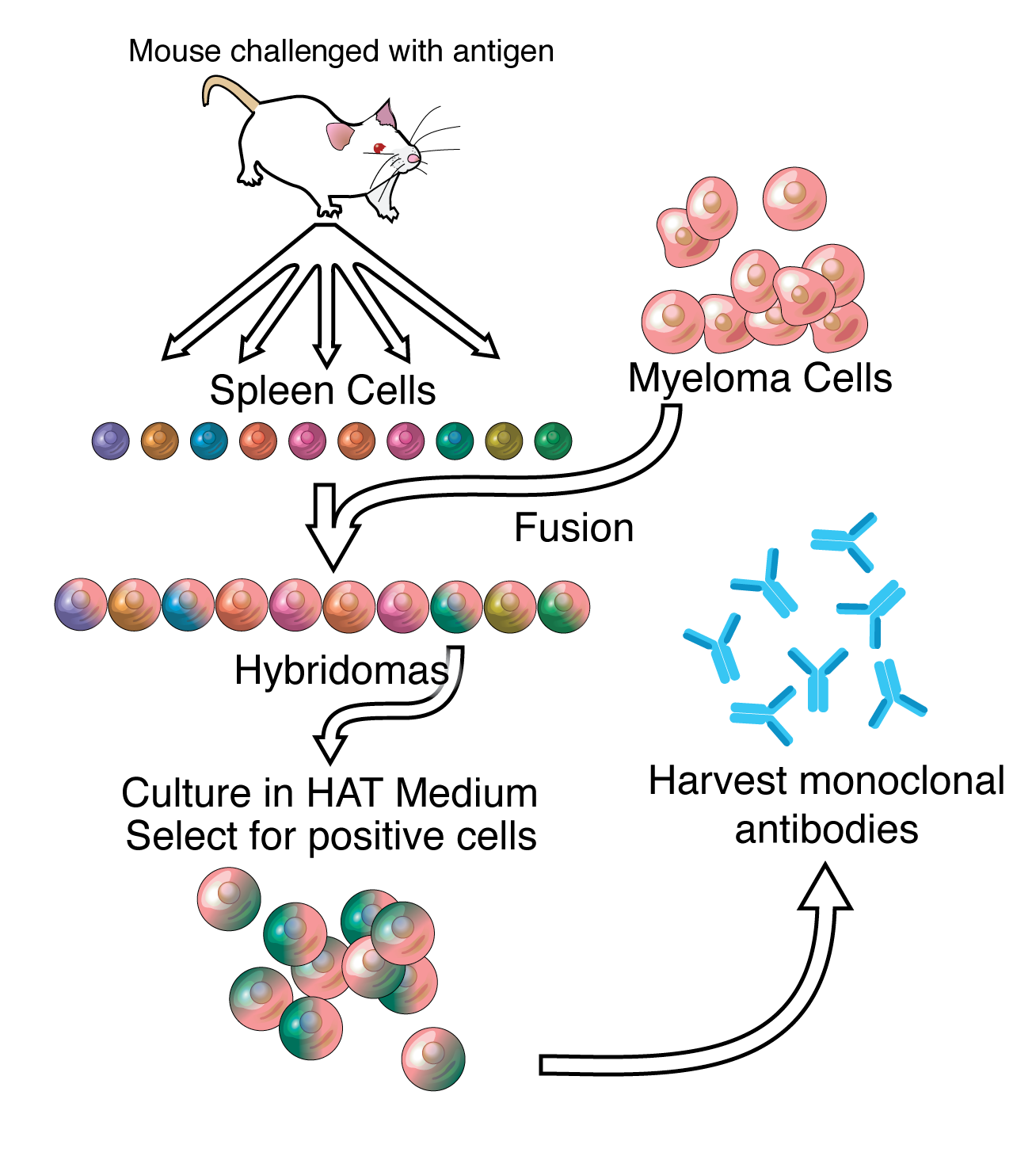
The hybridoma generation process.
Attribution: Adenosine CC BY-SA 3.0 via Wikimedia Commons
Hybridoma Sequencing Pitfall #1: Aberrant Myeloma Light Chains
Many myeloma partner cells have a confusing contribution to the hybridoma: an aberrant light chain. To prevent hybridomas from producing multiple antibodies, modern myeloma cell lines are engineered to eliminate functional antibody expression. However, commonly used cell lines such as SP2/0 still express an aberrant light chain transcript. Myeloma light chains are expressed alongside the desired light chains from the fusion partner, effectively infiltrating antibody transcription. The myeloma light chain will persist through library preparation and ultimately contribute to the final sequencing library (See Bradbury et al for an analysis of the pervasiveness of this issue). Although it is easy to determine the myeloma light chain in the data, it causes problems by consuming read space and possibly outcompeting the true light chain during amplification. The resulting data becomes dominated by the myeloma light chain, which could falsely label hybridoma samples as failed.
Our solution? Specialized primers designed to deplete the sample of the myeloma light chain. During amplification, a depletion primer is added to the reaction mixture in order to inhibit the amplification of the myeloma light chain. This ensures preferential amplification of the true light chain.
>SP2/0 IgK variable region nucleotide sequence
GACATTGTGCTGACACAGTCTCCTGCTTCCTTAGCTGTATCTCTGGGGCAGAGGGCCACCATCTCATACAGGGCCAGCAAAAGTGTCAGTACATCTGGCTATAGTTATATGCACTGGAACCAACAGAAACCAGGACAGCCACCCAGACTCCTCATCTATCTTGTATCCAACCTAGAATCTGGGGTCCCTGCCAGGTTCAGTGGCAGTGGGTCTGGGACAGACTTCACCCTCAACATCCATCCTGTGGAGGAGGAGGATGCTGCAACCTATTACTGTCAGCACATTAGGGAGCTTACACGTTCGGAGGGGGGACCAAGCTGGAAAT
>SP2/0 IgK variable region amino acid sequence
DIVLTQSPASLAVSLGQRATISYRASKSVSTSGYSYMHWNQQKPGQPPRLLIYLVSNLESGVPARFSGSGSGTDFTLNIHPVEEEDAATYYCQHIRELTRSEGGPSWK
The nucleotide and amino acid sequences for the aberrant light chain expressed by SP2/0 myeloma cells. The sequence contains an edit in the CDR3 that causes the J gene to be translated in the incorrect frame and ultimately stop translation early.
Hybridoma Sequencing Pitfall #2: Barcode Hopping
Barcode hopping, also called index hopping when it happens on the sequencer, occurs when the incorrect barcode becomes associated with a hybridoma sample. While index hopping occurs when libraries are multiplexed in a sequencing run, barcode hopping can occur when samples are pooled earlier in the process. This happens PCR amplification of pooled hybridoma samples. Primers containing barcodes for one sample anneal to templates from another sample due to the high homology of templates. Poor barcode design such as combinatorial barcodes that re-use the same partial barcode for multiple samples (e.g. a row barcode and a column barcode on a plate) can exacerbate this issue. Barcode hopping results in sequences from one sample being assigned to another sample. This problem becomes particularly insidious when some samples do not amplify well.
There are a variety of variables that influence this problem, such as overamplification resulting in depleted primers in the sample or incomplete template accumulation. The resulting conditions allow for incorrect annealing of templates and primers.
The best way to circumvent the issue of barcode hopping is to minimize PCR cycles and utilize dual unique barcodes. Unlike a combinatorial approach, dual unique barcodes have a unique label in the forward and reverse priming direction. In this case, in order to have any PCR artifacts, a template would have to experience barcode hopping twice- which is highly unlikely.
Hybridoma Sequencing Pitfall #3: RNA Quality
Hybridomas, like other live cells, are highly vulnerable to degradation when not stored in proper conditions. When the integrity of the hybridoma is compromised, the RNA is vulnerable to degradation which makes sequencing hybridomas with NGS more challenging. We recommend storing and shipping cells in RNA-preserving buffers such as RNAlater, DNA/RNA Shield, or similar products.
Because hybridomas usually contain a high transcript count of only one or a few different antibody sequences, it is possible to sequence a hybridoma with poor RNA quality. As long as enough transcripts remain intact, we can usually sequence the hybridoma.
While most hybridomas produce a large number of antibody transcripts, occasionally hybridomas have low transcript levels, despite having reasonable protein production. Hybridomas will produce antibody protein that accumulates in the supernatant and will show strong signal in binding assays. However, by the time the cells are preserved for sequencing, the transcription level has dropped. This can become a challenge for sequencing since there are not enough transcripts for efficient V(D)J amplification. In this instance, you can sequence the antibody protein directly using Valens.
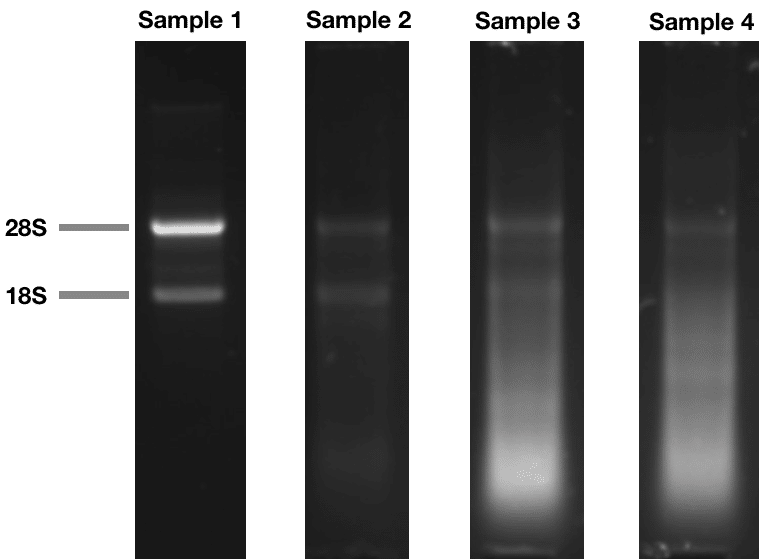
RNA gel across 4 samples with increasing RNA degradation. We described the impact of RNA degradation on bulk B cell repertoires in a previous blog post.
Conclusion
After sequencing 11,000 hybridomas we’ve seen it all. We have established workflows and optimized them over years to address the common pitfalls of hybridoma sequencing. The results are reliable, high-confidence antibody sequences that preserve the value of your assays for future research and development.

Rabbit pAb Sequencing
Griffin is species-agnostic, and can be used to sequencing polyclonal antibodies from other species – including rabbit like we did in a recent case study.

VHH Antibody Discovery
B cells and serum antibodies provide complementary information about the immune response. Our Alicanto platform combines B cell repertoire sequencing and serum antibody analysis to deliver diverse, functional VHHs.

Griffin vs Alicanto
What’s the different between serum-only antibody sequencing with Griffin and proteogenomic antibody sequencing with Alicanto? We investigate the advantages and trade offs of each approach in this blog post.